85-Foot vs 100-Foot
Yacht Charter Miami
Once a group has settled on a half-day or a full-day, the next real decision is size. The Limitless Yachts fleet splits into an 85-foot class and a 100-foot class, and the difference on the water is bigger than the numbers suggest.
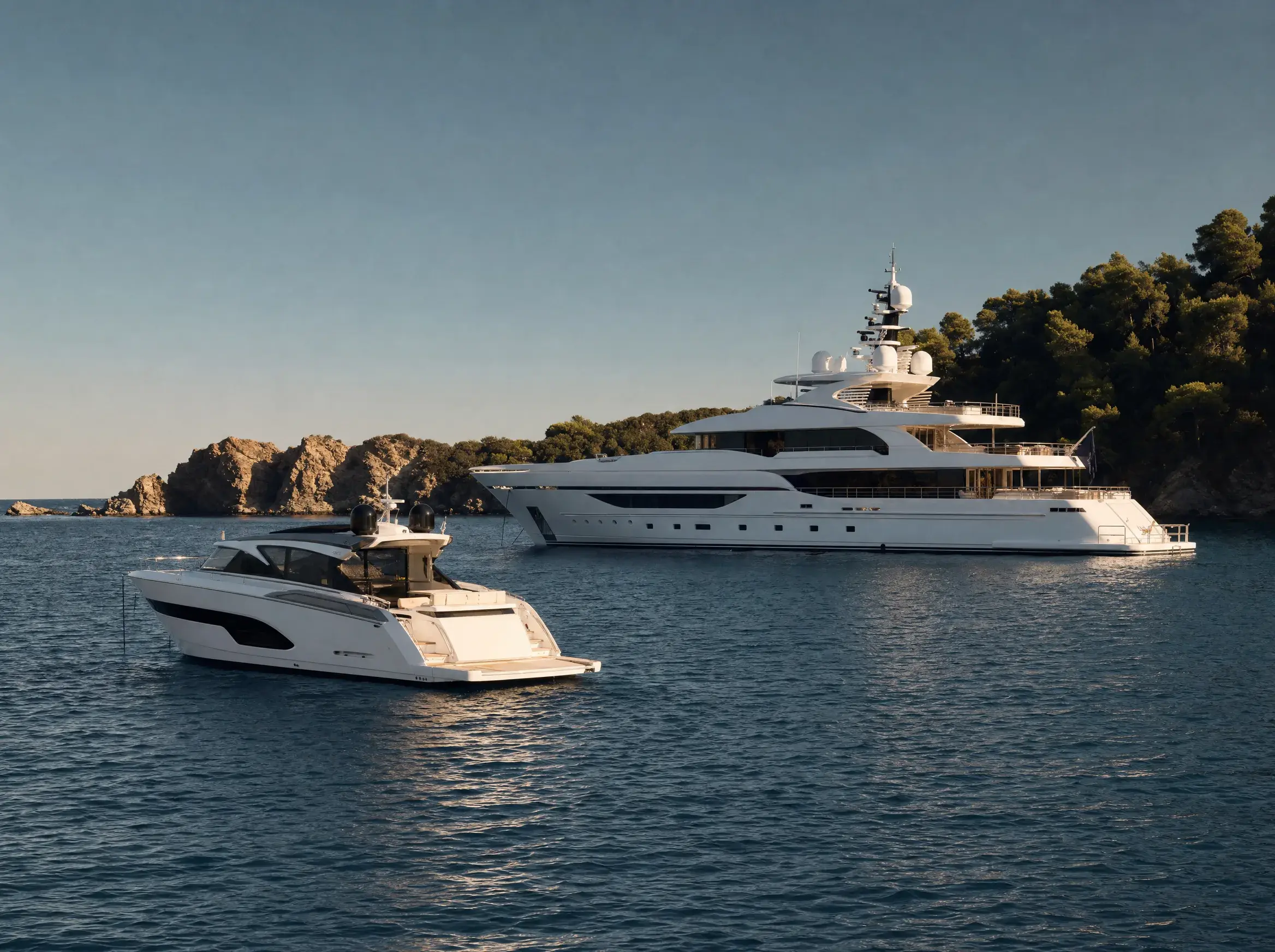
Once a Miami charter group has settled on a half-day or a full-day, the next real decision is size. The Limitless Yachts fleet splits into two classes: the 85-foot class, the Wally 85 and the Leopard 94, and the 100-foot class, the Azimut Daniella 100 and the Rodman 110. The gap looks small on paper, twelve guests against thirteen, but the difference on the water is real. A single open main deck against a multi-deck layout with a flybridge. A compact galley against a full-featured one. A lighter hull that planes quickly against a heavier one that holds steady in chop. Neither class is the better charter. The right one depends on the group, the occasion, and what the day is built around. This page lays out where each class wins.
85-Foot vs 100-Foot At a Glance
When 85-Foot Wins
The 85-foot class wins on register. A group of eight to twelve on the Wally 85 fills the deck without crowding it, and the single open main deck keeps everyone in one space, which is the right feel for a birthday lunch, a proposal, or a first charter where the group wants to be together rather than spread across three decks. The 85-foot class is also the easier vessel at the dock: it slips into the shallower marinas and the tighter berths at Pier 66 and Las Olas Marina that a 100-footer has to work around, and the lighter hull planes quickly, which shortens the run to the sandbar and leaves more of the window for the water. For first-time charterers the single-deck layout is simpler to move around and feels less institutional than a multi-deck vessel. One honest note on price: in this fleet the 85-foot class is not automatically the budget choice. The Wally 85 is the design-premium vessel and is priced above the 100-footers. The Leopard 94, also in the 85-class range, is the actual value option for groups watching the rate. The 85-foot class wins on intimacy, access, and handling, not on a lower number.
When 100-Foot Wins
The 100-foot class wins when the day needs room to spread out. The Azimut Daniella 100 and the Rodman 110 carry a multi-deck layout, a lower-deck salon, a main deck, and a flybridge, which turns a single group into several zones: a shaded lounge, a sun deck, a dining area that actually seats the whole party. For a thirteen-guest charter that wants to host rather than just ride, that square footage is the difference. The full-featured galley is the other real advantage. A chef can run a multi-course service from the Azimut Daniella 100 galley in a way the compact galley on the 85-foot class cannot support, so corporate lunches and celebration dinners that center on the food belong on the 100-foot class. The longer waterline also holds steadier in chop, which matters on a Bahamas-curious crossing or any day the bay is working, and it makes the 100-foot class the comfortable choice for overnight stays. The trade-off is access and handling: a 100-footer needs the deeper, larger berths and takes longer to reach a sandbar than the lighter 85-foot hull. The 100-foot class wins on space, galley capacity, and stability.
The Verdict
Match the class to what the day is built around. A ten-guest birthday dinner cruise belongs on the 85-foot class: the group fits one open deck, the boat is the venue rather than the spectacle, and the single-deck layout keeps everyone together for the toast. A thirteen-guest bachelor party with a music-video crew and rigging time belongs on the 100-foot class, where the multi-deck layout gives the production room to set up without clearing the guests off the deck. A corporate group hosting clients with a chef-served lunch should book the 100-foot class, because the galley capacity is the whole point and the compact 85-class galley cannot run the service at scale. A family of eight for a sandbar day belongs on the 85-foot class: the smaller vessel is easier to anchor, faster to the sandbar, and feels less institutional for a relaxed afternoon. For groups watching the rate, the honest answer is the Leopard 94, the value vessel in the 85-foot range. For groups who want the statement vessel and the design-forward photos, the Wally 85 is the premium 85-class choice. When the day is about hosting and food and space, go 100. When it is about an intimate group and an easy day on the water, go 85.
FAQs
Is the 100-foot always more expensive than the 85-foot?
No, and this surprises people. In the Limitless Yachts fleet the Wally 85 is the design-premium vessel and is priced above the 100-foot Azimut Daniella 100. Size does not drive price linearly here. The Leopard 94, in the 85-foot class range, is the actual value option. The concierge confirms the rate per vessel at booking.
How much real difference is there between 12 and 13 guests?
On paper, one guest. In practice the capacity number is not the point. The difference is deck space and comfort: the 100-foot class spreads a 13-guest group across multiple decks with room to move, while the 85-foot class keeps a 12-guest group on one open deck. Choose on how the group wants to use the space, not on the headcount.
Which class handles rough water better?
The 100-foot class. The longer waterline holds steadier when the bay is working or on a Bahamas-curious crossing. The lighter 85-foot hull planes faster and reaches a sandbar quicker, but it feels more of the chop. For open-water days and overnight stays, the 100-foot class is the more comfortable ride.
Can a chef do a full multi-course service on the 85-foot class?
A chef can plate and serve on the 85-foot class, but the compact galley limits active multi-course cooking. For a celebration dinner or a corporate lunch built around the food, the Azimut Daniella 100 and its full-featured galley are the right call. The concierge confirms the vessel-to-menu match at booking.